 AmilForge
Shard Simulator: Know Your Odds Before You Pull
By AmilForge · Updated May 2026 · 8 min read
Why simulating pulls matters
Pulling shards in RAID Shadow Legends is one of the most consequential resource decisions a player makes. Shards are scarce, events are time-limited, and the gap between a well-planned pull session and an impulsive one can be months of progression. The Shard Simulator in Raid Companion helps you make that decision with data rather than hope.
By running a simulation before you pull, you can see a realistic distribution of outcomes — how many Legendaries you might expect from a given shard count, what the chance of going dry is, and whether your stockpile is large enough to justify pulling on a specific banner.
RAID drop rates explained
Every shard type in RAID has published drop rates for each champion rarity. The base Legendary rate on Ancient and Void shards is low — typically around 0.5% per pull. This means that in a single pull, the overwhelming probability is that you will receive a Common, Uncommon, or Rare champion.
The rates by shard type approximately break down as follows:
| Shard Type | Legendary Rate (base) | Epic Rate (base) |
|---|---|---|
| Ancient | ~0.5% | ~5.5% |
| Void | ~0.5% | ~5.5% |
| Sacred | ~6% | Legendary-focused |
| Primal | ~0.5% | ~5.5% |
These are base rates. During certain events — Summoning Rush, Void Summoning events, and champion-specific banners — bonus rates may apply to specific champions or rarity tiers. The simulator accounts for standard rates; if an event has a bonus rate, that changes the math and should factor into your decision.
What "expected value" actually means for your pulls
A 0.5% Legendary rate means that on average, you'll receive one Legendary per 200 pulls. But averages can be misleading. The actual distribution of outcomes across 200 pulls follows a statistical curve: some players will get 3 Legendaries, some will get 0, and most will fall somewhere in the middle.
Specifically, with a 0.5% rate per pull:
- Pulling 10 Ancient shards gives roughly a 5% chance of a Legendary — meaning 95% of the time, no Legendary appears.
- Pulling 50 shards gives roughly a 22% chance of at least one Legendary.
- Pulling 100 shards gives roughly a 40% chance of at least one Legendary.
- Pulling 200 shards guarantees a Legendary via mercy if none appeared earlier.
These numbers tell a story that impulse pulling ignores: small shard counts are very likely to yield nothing of note. If you're holding 20 Ancient shards and a banner you want goes live, your odds of getting a Legendary are low enough that you may want to keep saving rather than spend resources that might be better used elsewhere.
How the Shard Simulator works
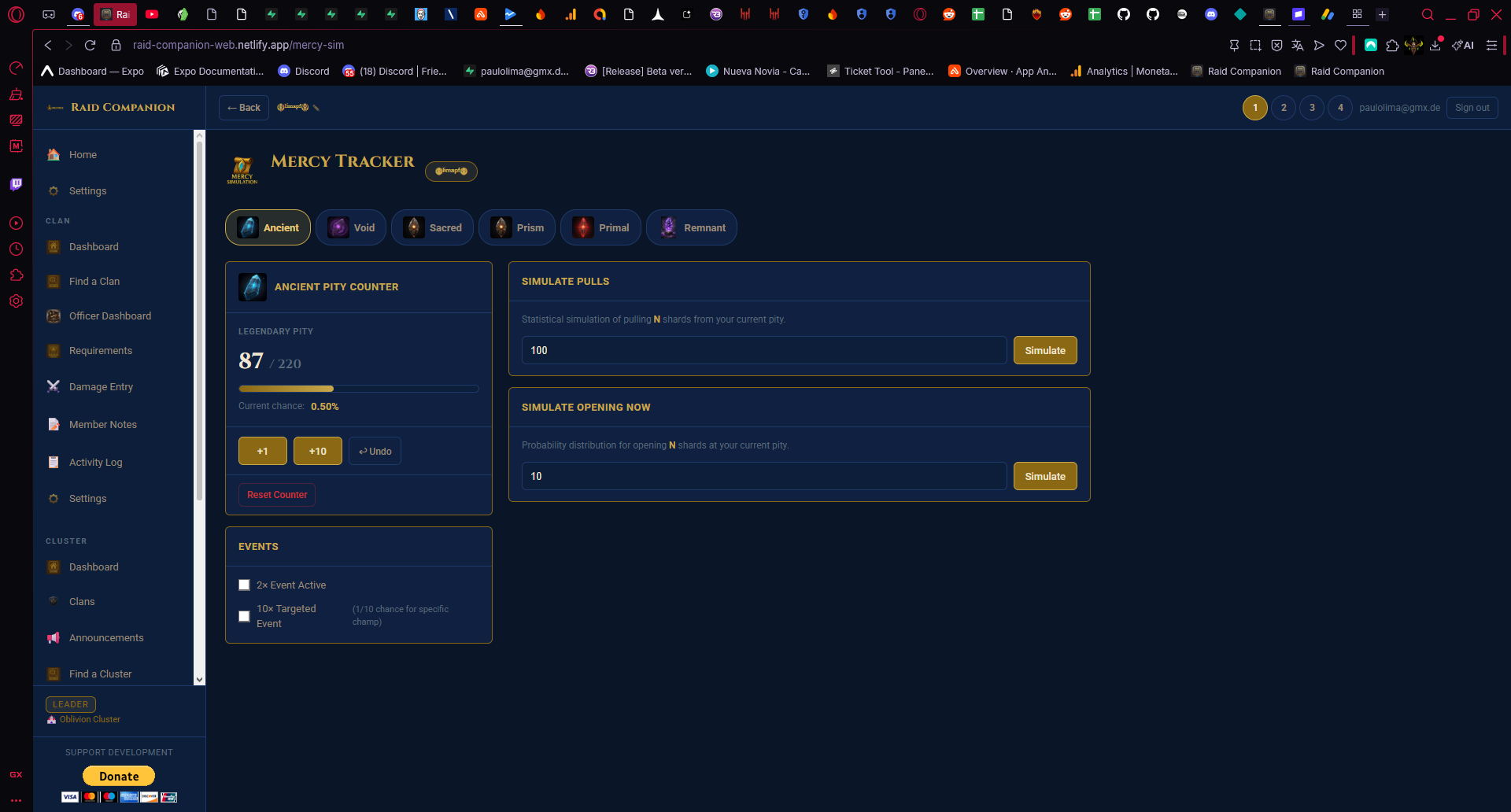
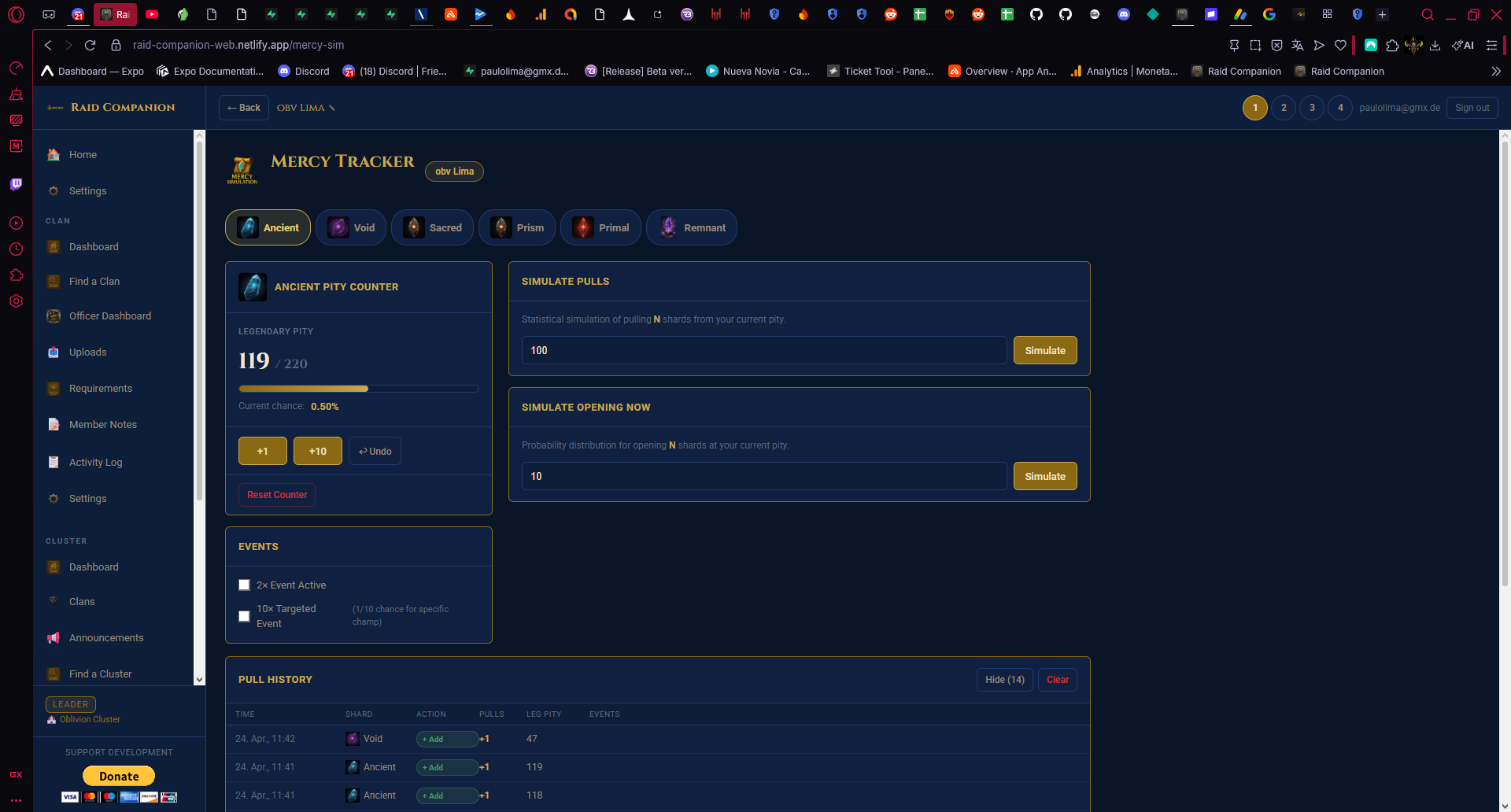
The Shard Simulator in Raid Companion runs thousands of pull sequences using the real drop rate data for each shard type. Instead of telling you a single expected value, it shows you the distribution of outcomes — so you can see not just what's likely, but what's possible.
Enter the number of shards you have and the shard type, and the simulator calculates:
- The probability of receiving at least one Legendary from your shard count
- The most likely number of Legendaries across the simulation runs
- Your current mercy progress and how it affects the simulation
- The chance of going completely dry (zero Legendaries) with your current stockpile
This gives you an honest picture before you commit. If the simulation shows a 12% chance of getting a Legendary from your 30 shards, you can make a conscious choice to pull knowing those are your real odds — not the hope that this time will be different.
Using the simulator for fusion events
Fusion events are where the Shard Simulator is most valuable. These events require you to pull specific champions within a time window, and the pressure of a deadline makes impulsive decisions tempting. The simulator cuts through that pressure.
Before a fusion event starts, enter your shard count of each relevant type into the simulator and check:
- What is your probability of pulling enough Legendaries to support the fusion requirements from your stockpile?
- If the probability is low, is there time to save more shards before the event ends?
- Are the fusion requirements achievable at all without also buying shards from the shop?
Players who run this calculation before fusion events consistently make better decisions about which fusions to attempt versus which to skip for a future cycle when they have more resources.
Rule of thumb: If your simulated probability of reaching your pull target is below 50%, you're likely to be disappointed by the outcome. Either save more shards before pulling, or adjust your expectations for what this session will yield.
Mercy and the simulator
Your current mercy counter significantly affects your simulated outcomes. If you're at mercy 150 on Ancient shards, your next guaranteed Legendary is only 50 pulls away — which dramatically changes the probability calculation compared to starting from zero mercy.
The Shard Simulator in Raid Companion integrates with the Mercy Tracker. When you have your mercy count logged, the simulator uses that number as the starting point for its calculations rather than assuming you're at mercy zero. This makes the simulation accurate to your actual account state.
What the simulator cannot predict
It's worth being clear about limitations. The simulator shows probabilities based on published drop rates — it cannot predict which specific Legendary you will receive. If a banner features 30 Legendary champions and you want one specific one, your probability of getting that champion specifically is much lower than your probability of getting any Legendary.
The simulator also cannot account for drop rate bonuses during events unless you manually adjust your inputs. Always check the current event's rate information before treating simulation results as final.
Try the Shard Simulator
The Shard Simulator is free in Raid Companion on Android and in the web app. Enter your shard count, check your mercy position, and get a realistic picture of your pull session before a single shard is spent.